OFF THE CLOCK

The Margin

Small reflections on work, routines, curiosity, and the parts of life that shape how I think.

Lifestyle Campus life PhD life BYU Field notes

FIELD NOTES / LIFE IN MOTION

01 / THE MOVIES Who Raymond Reddington could be Read →

1 October 2026

02 / THE MOVIES Going back in time to the movies Read →

24 September 2026

03 / LIFESTYLE The unexpected long trip home Read →

24 September 2026

notice → pause → learn → repeat

A FEW GUIDING IDEAS

Stay curious.

Make room.

Notice the ordinary.

ALL NOTES

NEWEST FIRST · TAP TO READ

Seven notes so far

2026

October 2026

Who Raymond Reddington could be

What I think about the identity of the Blacklist's main character, and why it matters.
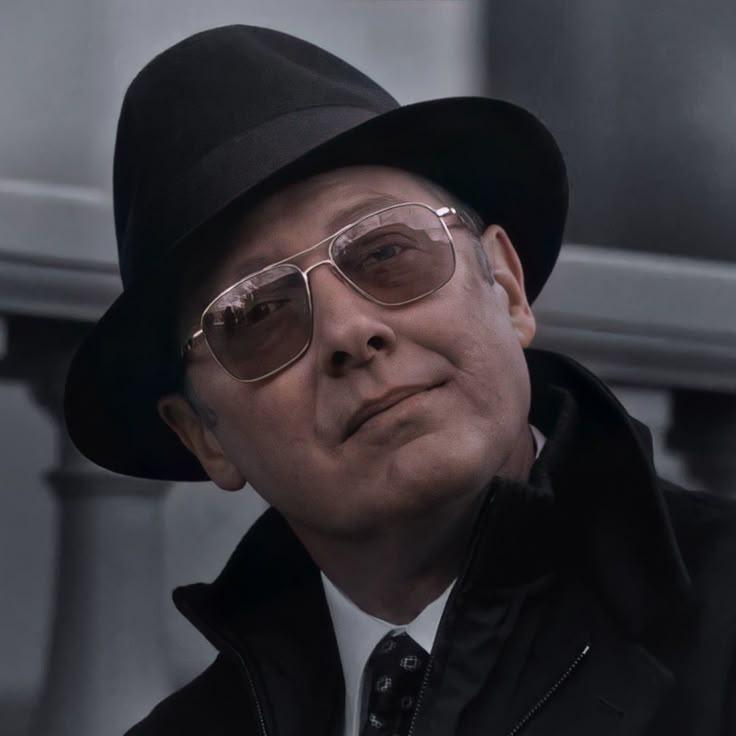
Raymond Reddington, the main character of The Blacklist

Raymond Reddington is a complex character with a mysterious past. He could be a former intelligence officer, a rogue agent, or someone with a hidden agenda. Initially, he appears to be a criminal, but as the series progresses, his true nature becomes more apparent. Elizabeth was trained to work with him, and their relationship is a key part of the show's narrative.

An interesting aspect of the character is his ability to manipulate situations to his advantage. It makes him a formidable opponent in the series. The real Raymond Redditnton died in the line of duty. later in the series, his true identity is revealed. most especially in season 5 episodes 5 and 6.

September 2026

Going back in time to the movies

I could sit back and watch the movies I loved as a young man, but I wanted to see them in the way they were meant to be seen.

Homeland, the 100, breaking bad, and a few other shows that defined my youth. these are the shows that shaped my perspective on life and the world around me.

Second paragraph, with a link.

The unexpected long trip home

A long trip home, and the multiple stops along the way.

First paragraph.

Second paragraph, with a link.

The Smart Intruder: Invasion of the Open Territory

Smart intruders has moved into the open territory. What happens next?

Just a Joke? What is the true definition of a "joke"? Is there a boundary that decides what kind of joke is acceptable between people? Maybe there is, and maybe that boundary says something about the relationship between them. So what do you call someone who is told to stop acting strangely "in the name of joking," and then goes ahead and does it anyway? ..

A new member recently joined our pod: a know-it-all, self-proclaimed nerd I'll call Snake. He assumes everyone thinks and acts the way he does. He's odd and nosy, and he keeps trying to force his way in. It isn't working.

On a dry, sunny day with a deadline hanging over everyone, one of the pod members, Leo, stepped away from his desk. Snake quickly slipped into Leo's space, took his radio player, put in a cassette playing "The Witch Is Dead" as a joke, and then went back to his own desk to hide and wait for Leo to come back.

When Leo returned, he could tell something was off. Snake was delighted to watch him look confused. He said nothing and waited. A few days later, Leo told the others what had happened. He knew Snake was listening, so he played it smart and said the incident had been reported to the authorities. When Snake heard that, he got scared, went pale, and started begging and confessing. It was just a "joke," he said.

How is that a joke? How can someone who presents himself as so knowledgeable invade another person's privacy and then call it a joke? Could he ever be trusted?

A poem I keep coming back to

Norma Cornett Marek’s “Tomorrow Never Comes,” and the habit it left me with.

I read this years ago and it has not left me since. It is called Tomorrow Never Comes, by Norma Cornett Marek, and the whole of it turns on one repeated phrase:

If I knew this would be the last time…

The poem runs that sentence through ordinary things. Watching someone sleep. Hearing their voice in prayer. A door closing behind them on an unremarkable morning. Each time it asks what you would have done differently had you known, and each time the answer is almost nothing: a minute longer, one more word, the thing said out loud instead of assumed to be understood.

That is what makes it land. It does not ask for grand gestures, and it does not really warn you about death. It warns you about deferral — about the quiet confidence that there will be another chance to say it.

The ending turns from regret to instruction. It stops describing what you would have done and starts telling you what to do now — hold the people you love, and spend your words on them while there are words to spend. What struck me is how ordinary the words it asks for are. Not declarations. Four short things most of us can manage and routinely do not:

“I’m sorry.” “Please.” “Forgive me.” “Thank you.”

It closes on the line I think about most:

The past doesn’t come back, and the future might not come.

What it changed in me is unremarkable from the outside. I call home more than I used to. I have mostly stopped saving things to say. The full poem is at Heart Whispers, where it is published with the author’s name on it — worth reading whole, and worth reading there rather than here.

Why I am keeping these notes

Research usually reaches people after the questions have been narrowed, the methods have been settled, and the writing has been polished.

Research usually reaches people after the questions have been narrowed, the methods have been settled, and the writing has been polished. A great deal of useful thinking happens before that point. I want this page to hold some of it.

My work sits at the intersection of human–computer interaction, youth sport, and coaching. These settings make a people-first approach essential. Athletes and coaches do not simply need more data or another dashboard; a tool has to earn its place by reducing friction, clarifying a decision, or making limited time more useful.

I will use these notes for ideas from building and studying systems, connections from things I am reading, and lessons that may not belong in a formal paper. The ideas will sometimes be provisional. The goal is to make the process more visible and give the thinking room to develop.

Useful technology should reduce the work

A system can present accurate information and still fail the people it was designed to help.

A system can present accurate information and still fail the people it was designed to help. This often happens when getting the insight requires more recording, organizing, and reviewing than a coach or athlete can reasonably sustain.

Before adding a feature, I find it useful to ask a smaller set of questions: What decision will this support? What information already exists? Who has to do extra work? What happens when the data is incomplete?

The most useful system may not be the one that collects the most data. It may be the one that asks for the minimum useful input, communicates uncertainty clearly, and fits into a routine that is already under pressure. Usability is not only whether someone can operate a tool; it is also whether using it remains worthwhile.

That is everything pinned so far

More when there is more.

WHAT IS IN HERE

FOUR CORNERS OF THE BOARD · TAP TO FILTER

You found this by clicking the dot. Back to the front.